 Last week, the National Association of Real Estate Editors (NAREE) held their 52nd Annual Journalism Conference in Las Vegas, NV. Among the many highly anticipated sessions was one called “Top Ten Issues Affecting Real Estate™,” given by Joseph Nahas, Jr., Chair of the Counselors of Real Estate & Senior Vice President of Equus Capital Partners. The Counselors of Real Estate (CRE) “is an international organization of high profile property professionals which include principals of prominent real estate, financial, legal, and accounting firms as well as recognized leaders of government and academia.” Their annual “top 10” list spans any and all issues that could have an impact on the real estate market. This year, the list was broken up into “Current” and “Long-Term Issues.” Today we’re going to focus on three of the five “Current” issues with a brief explanation of their impacts on the housing market today! E-Commerce & LogisticsWith promises of 2-day shipping no matter where you live, we are benefiting more now than ever before from the speed and ease-of-use of online retailers like Amazon. These e-retailers haven’t changed whether or not we buy certain items, but rather HOW we buy them! Many traditional malls or big-box stores are being repurposed as warehouses or distribution centers for online retailers so that they can get their products out faster. A Look to the Future: “Developers who are including experiences into their locations are the ones who will succeed. It’s about the experience and gaining something over just going to buy a product.” Generational Change & DemographicsBy now we’ve all heard that the millennial generation is the largest yet, just by sheer volume. The largest group of millennials turns 30 years-old in 2020. The average first-time homebuying age is between 30 and 32, depending on marital status. Real estate professionals will be inundated with more and more buyers as the years roll on. Nahas commented on this in his presentation, saying that,
Interest Rates & the EconomyThe interest rate that you secure for your mortgage is a big factor in your monthly housing cost and in how much you ultimately pay for your home. According to Freddie Mac’s Primary Mortgage Market Survey, rates rose to 4.62% on a 30-year fixed rate loan last week. The Federal Reserve also raised the federal funds rate for the second time this year. If unemployment continues to be at or near record lows, two more hikes are likely to come later this year. Nahas added,
Bottom LineIf you are planning on buying and/or selling a home this year, consult a local real estate professional who can help you navigate the conditions in your market and set you up for success. |
:quality(80)/u.realgeeks.media/newhomessavannah/_rgg/landscape_images/Livingroom.jpg)
Find Homes For Sale in the Savannah, GA, Area
Real Talk
When it comes to making a great real estate investment, knowledge is key. Our blog provides the essential information you'll need to make your next move.
3 Issues Facing Today's Real Estate Market?
Are Lending Standards Too Loose...or Too Tight??
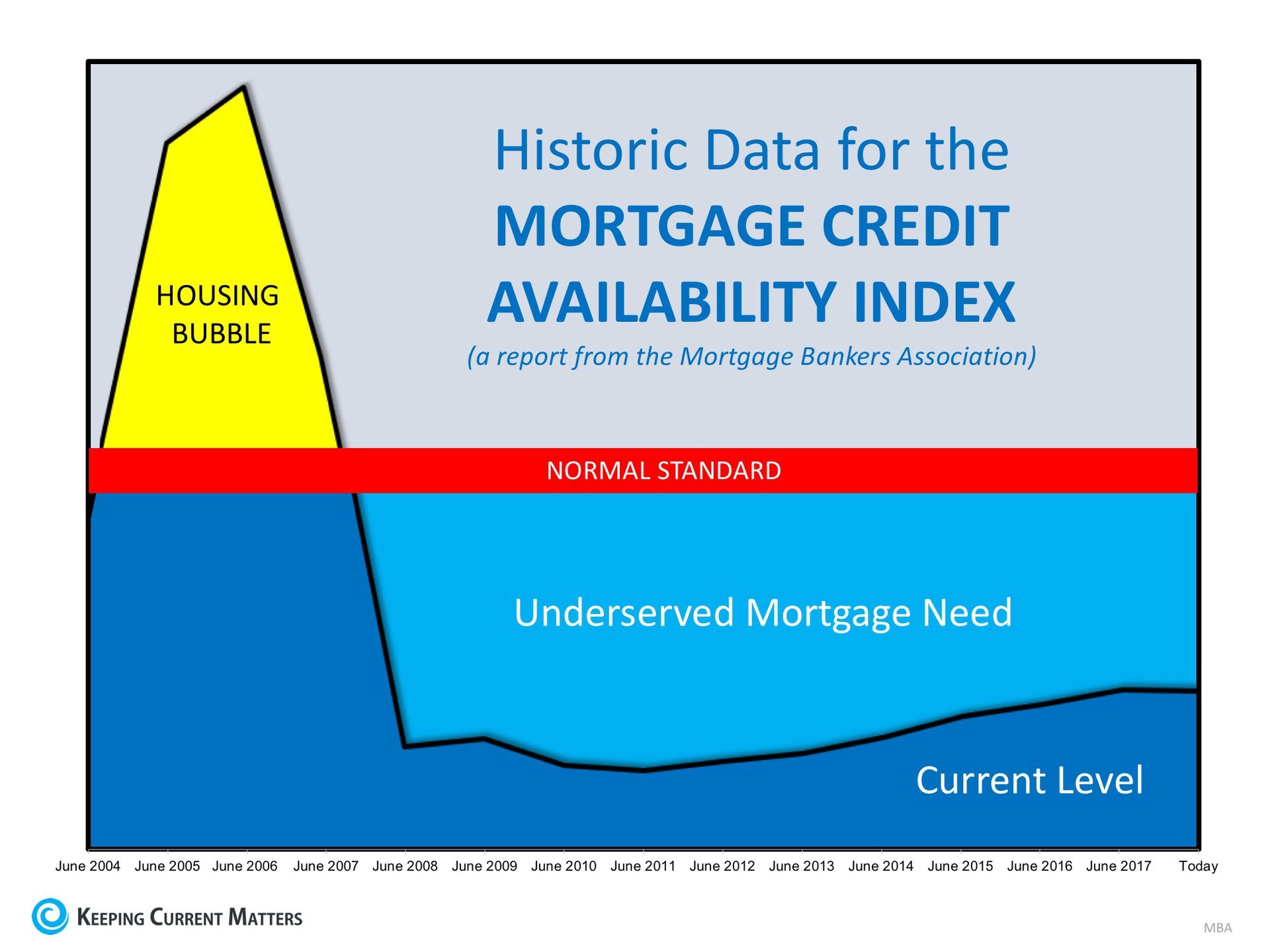
 With home values appreciating at record rates, some are concerned that we may be heading for another housing bubble like the one we experienced a decade ago. One of the major culprits of that housing boom and bust was the loosening of standards for mortgage credit. In a study done at the University of North Carolina immediately after the crisis, it was revealed that:
A study by John V Duca, John Muellbauer, and Anthony Murphy concluded that those risky mortgages caused the housing crisis:
How do today’s mortgage standards compare to those from 2004 to 2007?The Mortgage Bankers’ Association tracts mortgage standards in their Mortgage Credit Availability Index (MCAI). A decline in the MCAI indicates that lending standards are tightening, while increases in the index are indicative of loosening credit. While the chart below shows the index going back to that period between 2004 and 2007 when loose standards caused the housing bubble, we can see that, though the index has risen slightly over the last several years, we are nowhere near the standards that precipitated the housing crisis. Bottom LineIf anything, standards today are too tight and are preventing some qualified buyers from getting the mortgage credit they deserve. |
Did Tax Reform Kill the Luxury Market? NOT SO FAR!?
 The new tax code limits the deduction of state and local property taxes, as well as income or sales taxes, to a total of $10,000. When the tax reform legislation was put into law at the beginning of the year, some experts felt that it could have a negative impact on the luxury housing market. Capital Economics:
Mark Zandi of Moody’s Analytics:
The National Association of Realtors (NAR) predicted price declines in “high cost, higher tax areas” because of the tax changes. They forecasted a depreciation of 6.2% in New Jersey and 4.8% in Washington D.C. and New York. What has actually happened?Here are a few metrics to consider before we write-off the luxury market: 1. According to NAR’s latest Existing Home Sales Report, here is the percent change in sales from last year:
2. In a report from Trulia, it was revealed that searches for “premium” homes as a percentage of all searches increased from 38.4% in the fourth quarter of 2017 to 41.4% in the first quarter of 2018. 3. According to an article from Bloomberg:
Bottom LineAaron Terrazas, Zillow’s Senior Economist, probably summed up real estate’s luxury market the best:
|
![Top Reasons to Own Your Home [INFOGRAPHIC] | Keeping Current Matters](https://www.google.com/url?q=https%3A%2F%2Ffiles.keepingcurrentmatters.com%2Fwp-content%2Fuploads%2F2018%2F05%2F23110322%2FHomeownership-Month-KCM-ENG.jpg&sa=D&sntz=1&usg=AFQjCNHsB6o2EXLYe_nYSHp4yM7gkdHWVQ)
Drop in Inventory Fuels Sales Slowdown ?
Some Highlights:
|
![Drop in Inventory Fuels Sales Slowdown [INFOGRAPHIC] | Keeping Current Matters](https://files.keepingcurrentmatters.com/wp-content/uploads/2018/05/24164440/EHS-APR-KCM-ENG.jpg)
Renters Under 50 Want to Buy a Home!?
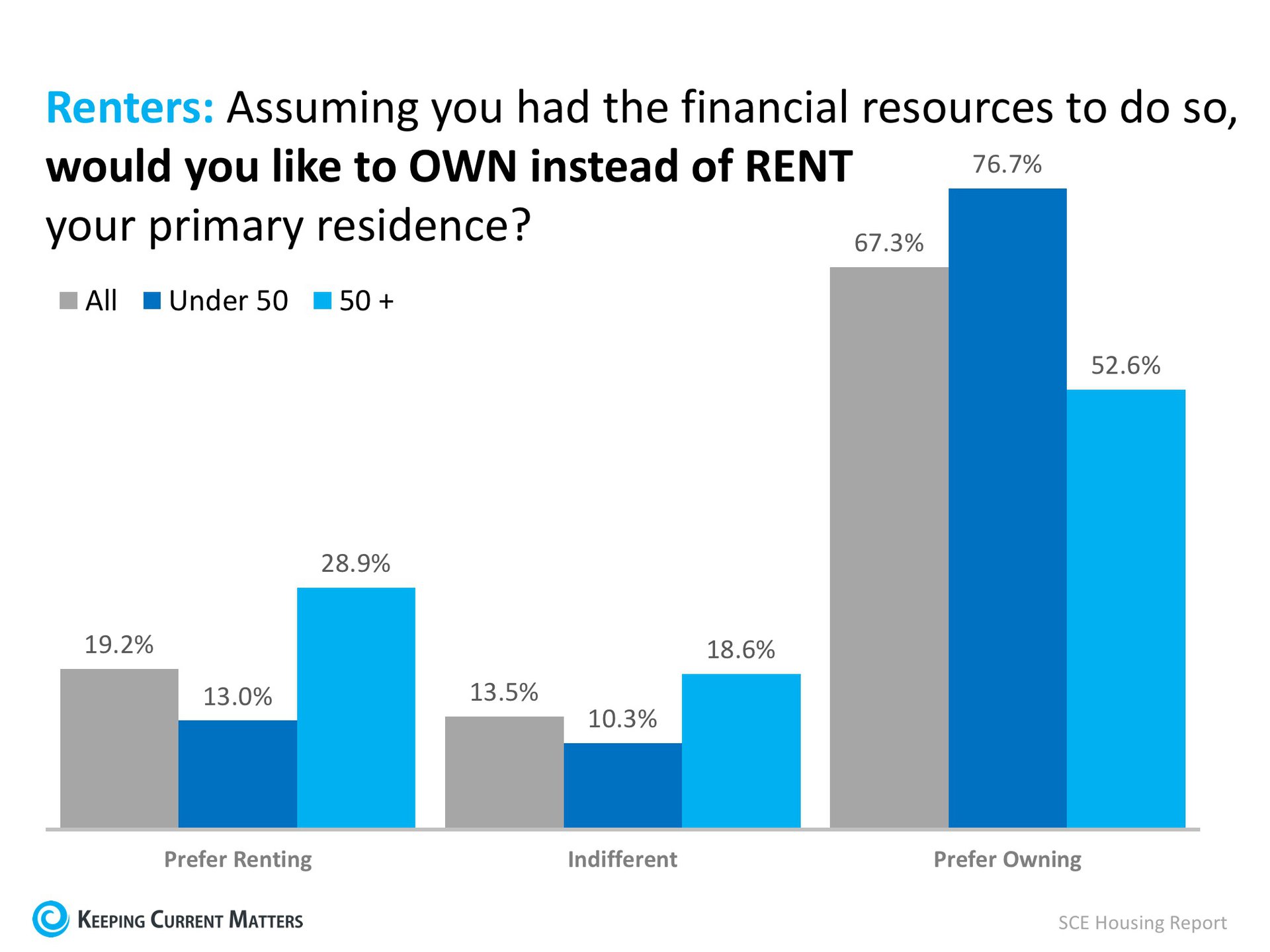
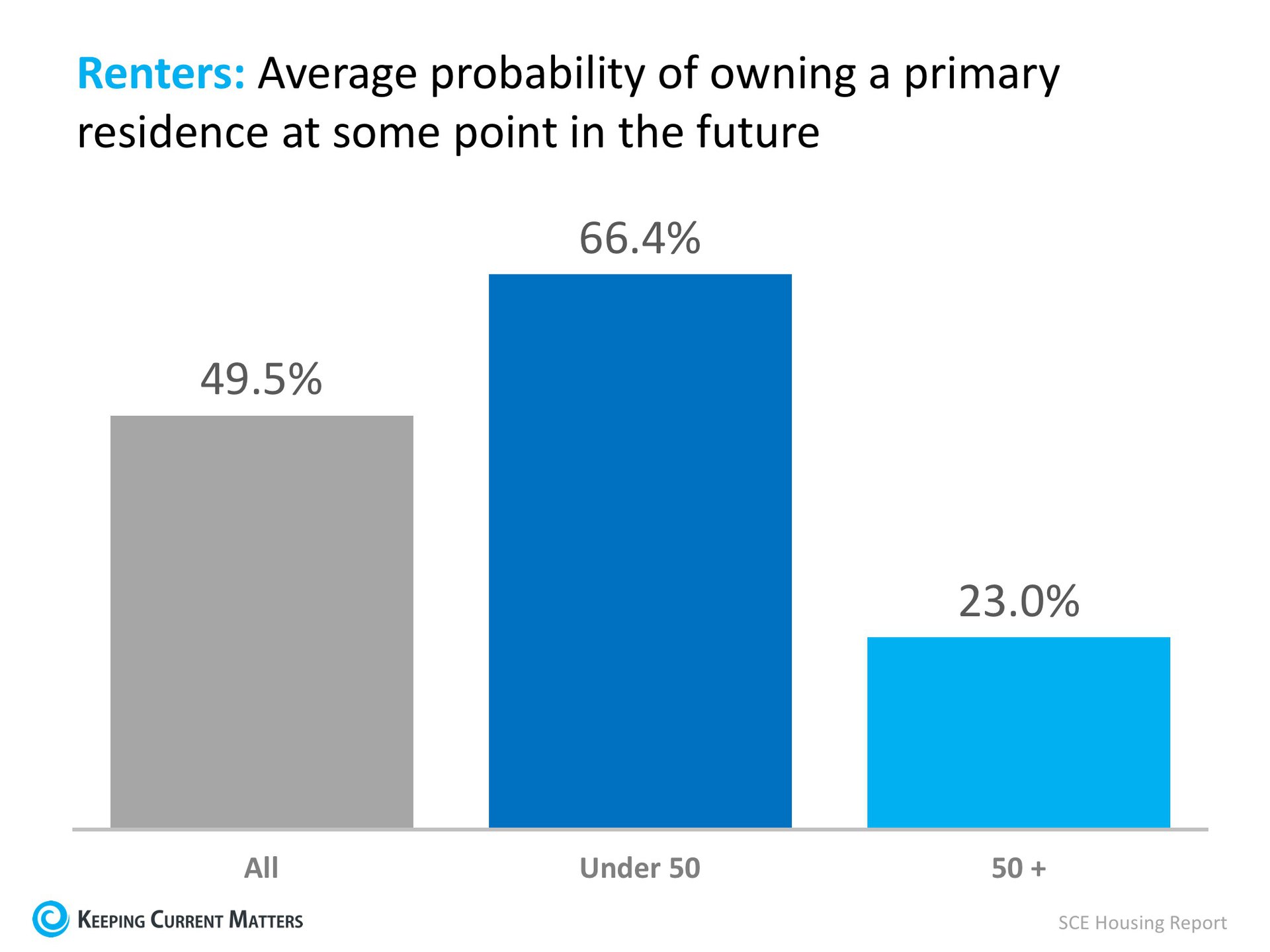
 Every year, the New York Federal Reserve publishes the results of their Survey of Consumer Expectations (SCE). Each survey covers a wide range of topics including inflation, labor market, household finance, credit access and housing. One of the many questions asked in the housing section of the survey was: Assuming you had the financial resources to do so, would you like to OWN instead of RENT your primary residence?Over three-quarters of respondents under the age of 50 said that they would prefer to own their home, rather than rent. While only 52.6% of those over 50 would prefer to own. The full breakdown can be found in the chart below. When renters were asked what the average probability of owning a primary residence at some point in their future was, 66.4% of those under 50 believed that they would eventually own their home, while only 23% of those over 50 did. Bottom LineMany had wondered if young Americans had lost their desire to own a home, but for those renting now, that dream is still alive. |
Don't Wait to Sell Your House! Buyers Are Out Now?
 Recently released data from the National Association of Realtors (NAR) suggests that a now is a great time to sell your home. The concept of ‘supply & demand’ reveals that the best price for an item is realized when the supply of that item is low and the demand for that item is high. Let’s see how this applies to the current residential real estate market. SUPPLYIt is no secret that the supply of homes for sale has been far below the number needed to sustain a normal market for over a year at this point. A normal market requires six months of housing inventory to meet the demand. The latest report from NAR revealed that there is currently only a 3.6-month supply of houses on the market. Supply is currently very low!DEMANDA report that was just released tells us that demand is very strong. The most recent Foot Traffic Report (which sheds light on the number of buyers who are actually out looking at homes) disclosed that “foot traffic grew 10.5 points to 52.4 in March as the new season approaches.” Demand is currently very high!Bottom LineWaiting to sell will only increase the competition between you and all of the other sellers putting their houses on the market later this summer. If you are debating whether or not to list your home, contact a local real estate professional who can explain the conditions in your market.
|
Is Your First Home Within Your Grasp Now?
Some Highlights:
|
![Is Your First Home Within Your Grasp Now? [INFOGRAPHIC] | Keeping Current Matters](https://files.keepingcurrentmatters.com/wp-content/uploads/2018/05/17111619/Within-Your-Grasp-KCM.jpg)
Moving Up to Your Dream Home? Don't Wait!?
 Mortgage interest rates have risen by more than half of a point since the beginning of the year, and many assume that if mortgage rates rise, home values will fall. History, however, has shown this not to be true. Where are home values today compared to the beginning of the year?While rates have been rising, so have home values. Here are the most recent monthly price increases reported in the Home Price Insights Report from CoreLogic:
Not only did prices continue to appreciate, the level of appreciation accelerated over the first quarter. CoreLogic believes that home prices will increase by 5.2% over the next twelve months. How can prices rise while mortgage rates increase?Freddie Mac explained in a recent Insight Report:
Bottom LineIf you are thinking about moving up to your dream home, waiting until later this year and hoping for prices to fall may not be a good strategy. |