Real Talk 

When it comes to making a great real estate investment, knowledge is key. Our blog provides the essential information you'll need to make your next move.

May 25, 2016

Sell NOW Before Competition Hits the Market

Sell NOW Before Competition Hits the Market

Sell NOW Before Competition Hits the Market | Keeping Current Matters

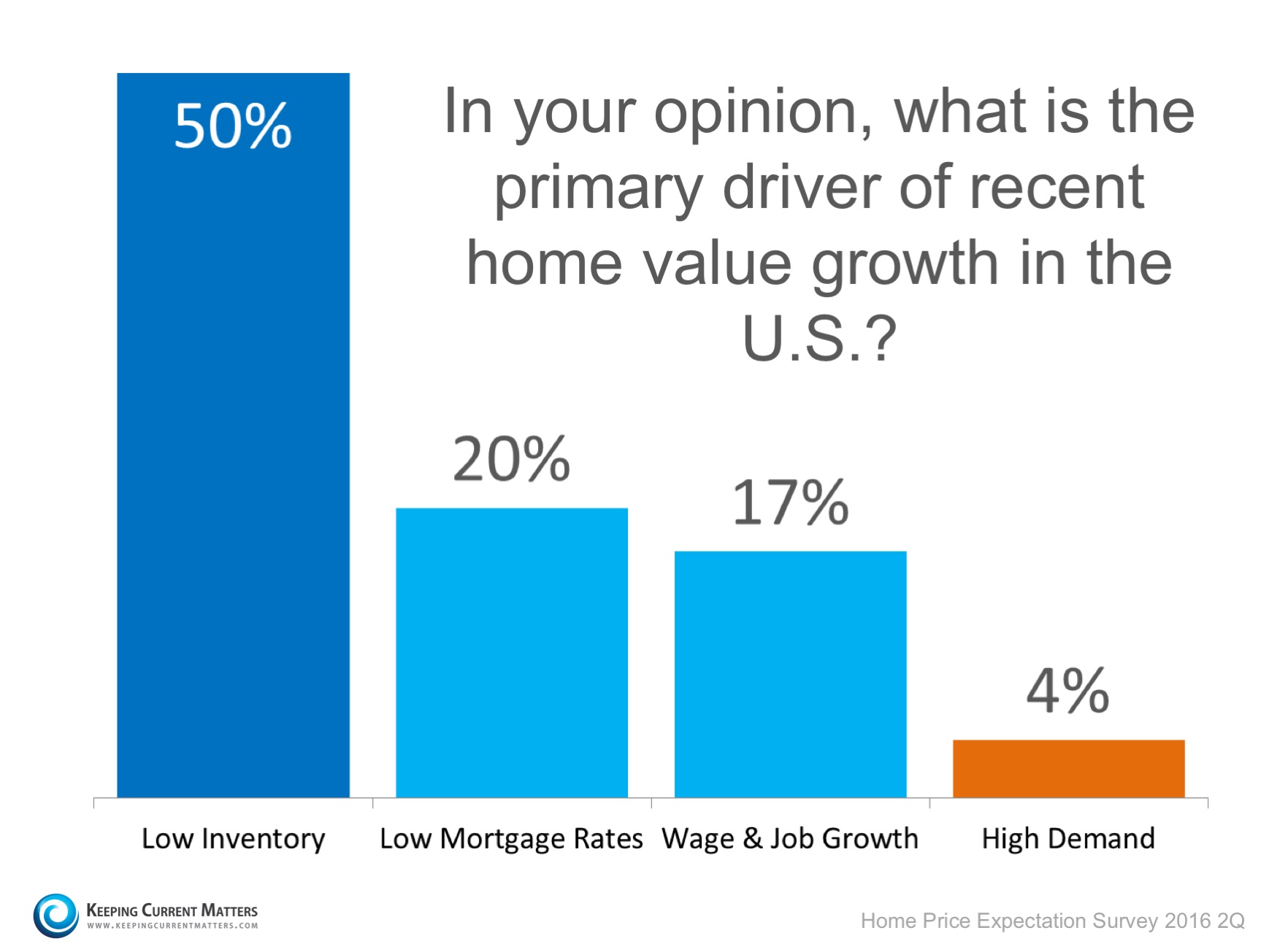
 In their current edition of the Home Price Expectation Survey released last week, Pulsenomics asked this question of the 100+ economists, real estate experts and investment & market strategists they surveyed:

"In your opinion, what is the primary driver of recent home value growth in the U.S.?"

Here are the top four reasons given by those surveyed: Sell NOW Before Competition Hits the Market As we have stated before, the current lack of inventory in most housing markets has caused home appreciation to increase at greater percentages than historical averages. This means that this is a great time to sell your home as supply is low and demand is high.

However, things may be about to change...

The fortuitous situation sellers see themselves in may soon change for three reasons:
  1. As more homeowners realize their equity situation has dramatically improved over the last four years, they will be more likely to put their homes on the market.
  2. With the residential real estate sector outperforming a sluggish economy, more home builders will be looking to add new construction inventory to a depleted supply of housing stock.
  3. Many banks are just now foreclosing on loans that have been delinquent since the housing bust. These houses will also be coming to market.
According to Daren Blomquist, senior vice president of RealtyTrac, in the Q2 2016 U.S. Residential Property Vacancy and Zombie Foreclosure Report:
"Lenders have been taking advantage of the strong seller's market to dispose of lingering foreclosure inventory."

Bottom Line

In most housing markets, don't wait for this additional competition to hit the market. If you are considering selling your house, now may be the time.
Posted in Selling Your Home
May 23, 2016

The Presidential Election and Its Impact on Housing

The Presidential Election and Its Impact on Housing

2160519-Share-STM

Every four years people question what effect the Presidential election might have on the national housing market. Let’s take a look at what is currently taking place. The New York Times ran an article earlier this week where they explained:

“A growing body of research shows that during presidential election years — particularly ones like this when there is such uncertainty about the nation’s future — industry becomes almost paralyzed. A look at the last several dozen election cycles shows that during the final year of a presidential term, big corporate investments are routinely postponed, and big deals are put on the back burner.

The research is even more persuasive on the final year of an eight-year presidential term, when a new candidate inevitably will become president.”

We are seeing this take form in the latest economic numbers. However, will this lead to a slowdown in the housing market? Not according to Fannie Mae, Freddie Mac or the National Association of Realtors.

The Impact on Housing Throughout 2016

Let’s look at what has happened and what is projected to happen by these three major entities.

National Association of Realtors

“In spite of deficient supply levels, stock market volatility and the paltry economic growth seen so far this year, the housing market did show resilience and had its best first quarter of existing-sales since 2007.”

Freddie Mac

“Recent data darkened the growth outlook for the first quarter of 2016. However, despite the disappointing economic reports, we still forecast housing to maintain its momentum in 2016.”

Fannie Mae

“Consumers and businesses showed caution at the end of the first quarter…(but) Home sales are expected to pick up heading into the spring season amid the backdrop of declining mortgage rates, rising pending home sales and purchase mortgage applications, and continued easing of lending standards on residential mortgage loans.”

Bottom Line

Even during this election year, the desire to achieve the American Dream is greater than the fear of uncertainty of the next presidency.

May 16, 2016

My Favorite Staging Accessory: Mirrors

My Favorite Staging Accessory: Mirrors

Styled Staged & Sold will be featuring staging professionals’ favorite staging accessories and props over the next few weeks. (Do you have a favorite? Submit your favorite for consideration to mtracey@realtors.org.)

Gray_mirror3

Photo credit: Karen Hakola, listing agent


Go-to prop: Mirrors

Stager: Natalie Gray, Gray Group Design, San Clemente, Calif.


Why I love them: “Mirrors are my favorite staging accessory because they play many roles. They can make a space feel larger, increase light in a room, act as artwork to create a mood, and they can reflect a great view. Using a mirror also gives a stager the opportunity to show off an architectural feature or other selling point of the property that a buyer might otherwise overlook.”

Gray_mirror2

Photography by VirtualWalkthrough; Adam Alcaraz & Max Black, listing agents

Make it work tips:

1. Use a mirror to lighten up an otherwise dark space. Adding mirrors along with reflective surfaces – like tables and glassware — can bring more light to a room.

2. Choosing a great mirror is like choosing artwork for a property. The size, shape and style should compliment the architecture, and space of the property.

3. Be careful when taking photos. When using mirrors, you need to check the reflection from all angles and make sure the photographer is able to capture the best angle of the room without being in the shot.

Gray_mirror1
Posted in Selling Your Home
May 12, 2016

4 Reasons to Move Up to Your Dream Home This Spring

4 Reasons to Move Up to Your Dream Home This Spring

STM-Share-2

Spring is in full force; the summer months are right around the corner. If you are debating moving up to your dream home, here are four great reasons to consider listing your current home and moving up to your dream home now, instead of waiting.

1. Buyer Demand is High & Inventory is Low

Recent numbers show that buyer demand is at the highest peak experienced in years, and inventory for sale is at a 4.5-month supply, which is still markedly lower than the 6 months needed for a historically normal market.

Demand in many markets is far exceeding the supply, and more properties in March sold in less than 30 days (42%) than in any month since last July.

Listing your home today can greatly increase exposure to buyers who are out in force and ready to act.

2. Prices Will Continue to Rise

CoreLogic recently released their latest Home Price Index in which they predict that national home values will appreciate by 5.3% by this time next year.

The bottom in home prices has come and gone. Home values will continue to appreciate for years. Waiting for your current home’s value to increase before selling could price you out of your new home if you aren’t careful.

3. Mortgage Interest Rates Are Still Near Record Lows

Interest rates have remained below 4% for some time now and are substantially lower than the rate previous generations paid when getting a mortgage.

The Mortgage Bankers Association, Fannie Mae, Freddie Mac & the National Association of Realtors are in unison projecting that rates will rise over the next 12 months.

An increase in rates will impact YOUR monthly mortgage payment. Even an increase of half a percentage point can put a dent in your family’s net worth. Whether you are moving up or buying your first home, your housing expense will be more a year from now if a mortgage is necessary to purchase your home.

4. It’s Time to Move On with Your Life

The ‘cost’ of a home is determined by two major components: the price of the home and the current mortgage rate. It appears that both are on the rise. But, what if they weren’t? Would you wait?

Look at the actual reason you are buying and decide whether it is worth waiting. Have you always wanted to live in a certain neighborhood? Would a climate change be just what the doctor ordered? Would you like to be closer to your family?

Bottom Line

If the right thing for you and your family is to move up to the home of your dreams this year, buying sooner rather than later could lead to substantial savings.

Posted in Buying a home
May 10, 2016

Mortgage Rates Remain at Historic Lows

Mortgage Rates Remain at Historic Lows

STM-Share-5

The latest report from Freddie Mac shows that the 30-year fixed-rate mortgage averaged 3.61% last week, slightly down from the week before (3.66%), and nearly 20 points lower than a year ago (3.80%).

This is great news for homebuyers who are dealing with rising prices due to a low inventory of homes for sale in many areas of the country. Freddie Mac expressed their optimism for the rates to remain low throughout the spring in a recent blog post:

“We expect mortgage interest rates to stay well under 4% as we head into the heart of the spring homebuying season. We're predicting it to be the best one in 10 years, which should provide even greater opportunities for first-time homebuyers.”

Below is a chart of the weekly average rates in 2016, according to Freddie Mac.

Mortgage Rates Remain at Historic Lows | Simplifying The Market

Rates have again fallen to historic lows yet many experts still expect them to increase in 2016. One thing we know for sure is that, according to Freddie Mac, current rates are the best they have been since last April.

Sean Becketti, Chief Economist for Freddie Mac recently explained:

“Since the start of February, mortgage rates have varied within a narrow range providing an extended period for house hunters to take advantage of historically low rates.”

Bottom Line

If you are thinking of buying your first home or moving up to your ultimate dream home, now is a great time to get a sensational rate on your mortgage.

Posted in Buying a home
May 2, 2016

5 Ways To Upgrade A Landscape for Less Than $1000

5 Ways to Upgrade a Landscape for Less Than $1,000


Howmuch image

Photo credit: pixabay

The landscaping is a major part of a home’s curb appeal. Depending on where you live, landscaping can also be a crucial part of helping to control wildlife, and reducing energy costs by providing things like shade. There are many ways you can change your landscaping without breaking the bank too. The following five upgrades can all be done for less than $1,000.

1. Fertilizing the lawn

Fertilizing the lawn is a fast and low cost way to help improve the way your whole yard looks and feels. At the end of a long winter, fertilizer can help revive your grass, helping it green up faster, and providing a more lush surface. Some fertilizers can also kill weeds, which can further help improve your lawn’s appearance.

Cost: The average cost of fertilizing your lawn is $0.03 a square foot, assuming a 6,000 square foot lawn. The total range of costs is between $0.02 a square foot for a DIY job, to $0.04 a square foot during peak season.

Money-saving tips

  • Fertilize your lawn early in the season to take advantage of lower prices, and to maximize your lawn’s growth.
  • Water your lawn regularly early in the morning to help prevent it from drying out, which will help your fertilizing go further.

DIY Considerations

This job is entirely suitable for DIY. All you need is a spreader, and the ability to walk over the entire area of your lawn.

2. Tree Planting

Planting new trees on your property has a lot of advantages. Trees help prevent soil erosion, while also providing shade and cleaner air. The right trees can also help you improve your home’s curb appeal, and complement the rest of your landscaping at the same time.

Cost: The average cost for planting new trees is $106 per small tree delivered and planted, with a minimum of five trees. The total costs range from $75 a tree for five small trees delivered off site and planted DIY to $2423 per large tree delivered and planted with a minimum of five trees.

Money-saving tips

  • Check with utility companies before planting to ensure the trees will not be in the way of power lines, as this could result in additional expenses to trim or remove the trees.
  • Check with your town or state to find out about programs which provide shade giving trees for free in sunny areas.

DIY Considerations

This job may be suitable for DIY, but assumes the ability to dig a hole large enough for each tree. Equipment such as mini-excavators can help make this job easier, but do increase price.

3. Stain Your Deck

The deck is a major part of your home’s curb appeal, as well as enjoyment of the property. Sun, wind, rain, hail, and snow can all pay a heavy toll on your deck’s appearance, however. Over time, old stain may fade, crack, or peel, exposing the wood below to the elements, which in turn can mean the rotting of the wood on your deck itself. Applying a new coat of stain can help maintain not only your deck’s good looks, but also its integrity.

Cost: The average cost to stain a deck is around $2 a square foot, including labor and equipment such as pressure washers and the stain itself.

Money-saving tips

Most older decks need to be power washed before staining; consider renting a power washer yourself to do the cleaning before having the deck professionally stained.

DIY Considerations

This job is entirely suitable for DIY; be sure to rent the proper equipment before hand, and to put on at least two coats of stain to ensure the job lasts.

4. Fountain Installation

Fountains add a lot of interest and tranquility to your yard and landscaping. The sound of running water is often enjoyable for many people using the space, while the look of a fountain can increase your curb appeal. There are many different types and styles of fountain available, which can increase your chances of finding one that fits your needs.

Cost: The cost of a fountain installation depends largely on the type of fountain you’re installing. The least expensive option is a standalone bird bath, which costs between $150 and $300. Another inexpensive option may include a wall fountain with costs ranging from $600 to $1,200.

Money-saving tips: 

  • Consider adding a fountain at the same time as other landscaping is being done to help lower the labor costs of the project as a whole.
  • Purchase a fountain kit that makes installation easier, lowering the overall costs.

DIY Considerations

Whether not your fountain can be installed DIY is largely dependent on the type you are having installed. Kits and things like bird baths are easier to install than fountains which must be crafted or poured on site.

5. Fence replacement

Fencing can not only enhance your landscaping and curb appeal, it can offer a lot of other benefits as well. Pet containment, privacy, and creating a safe place for children to play are all great reasons to consider installing a new fence or replacing your old one.

Cost: The average cost to install a new fence is $13.26 a linear foot for galvanized steel chain link fencing. Total costs range from $7.02 a foot for a DIY installation to $28 per foot for a redwood split rail fence.

Money-saving tips: 

  • If you’re replacing an old fence with a new one, consider doing the tear out of the old fence yourself. This can significantly lower the labor fees on the new installation.
  • Fencing prices are also largely dictated by the material that the fencing is made of. Choose the fencing that best meets your functional needs first, then consider looks to make sure you get the lowest cost fence for your yard.

DIY Considerations

Fence installation can be difficult for those that do not have the experience or necessary tools. Digging the holes for the fence posts can be difficult and time consuming, and in most cases it may be best to leave this job to professionals.

April 30, 2016

Buyer Cheat Sheet for a Seller's Market

Buyer Cheat Sheet for a Seller's Market

In a seller's market, home buyers need to be willing and able to act fast to snag the home they want. This spring, areas across the country are facing a limited number of homes for sale. Realtor.com® offers up a cheat sheet for surviving a seller's market.

  • Be on call. "If you're only looking now and then when it's convenient, you're probably wasting your time," says James Malmberg, a real estate professional in Sherman Oaks, Calif. He suggests treating house hunting like job hunting. If someone calls with a lead, follow up promptly to gauge whether it could be a good fit and don't linger.
  • Bring the paperwork. To be taken seriously, buyers would be wise to get a mortgage pre-approval letter as well as a "proof of funds" form from their bank to show they have enough to cover a down payment. They'll be able to act quicker when they do find the right house.
  • Limit the contingencies. In a seller's market, buyers may need to drop some of the contingencies to score the house. Sellers prefer the fewest number of hurdles to closing as possible. If your buyers come in with several contingencies — such as "if" they secure financing — the sellers are more inclined to bypass their offer and take another with less hassle. Also, "don't waste your time lowballing a seller," advises Sean Kelley, a real estate professional with Howard Hannah in Pittsburgh, Pa. "Always put in an aggressive offer."
  • Cast a wide net. Search for homes outside prime locations if faced with limited or high-priced choices. Buyers need to carefully consider what they're willing to compromise on. "Sometimes properties sit, even in a seller's market, because of a problem that is scaring other buyers away," such as some renovation work that may need to be done, Malmberg says. Those "flaws," however, might not be a big deal to your buyers. "Finding a house this way can also cut down on the amount of competition you will face," Malmberg adds.
Posted in Buying a home
April 28, 2016

6 Tips for Choosing the Best Offer for Your Home

6 Tips for Choosing the Best Offer for Your Home

Have a plan for reviewing purchase offers so you don’t let the best slip through your fingers.

You’ve worked hard to get your home ready for sale and to price it properly. With any luck, offers will come quickly. You’ll need to review each carefully to determine its strengths and drawbacks and pick one to accept. Here’s a plan for evaluating offers.


1. Understand the process.

All offers are negotiable, as your agent will tell you. When you receive an offer, you can accept it, reject it, or respond by asking that terms be modified, which is called making a counteroffer.

2. Set baselines.

Decide in advance what terms are most important to you. For instance, if price is most important, you may need to be flexible on your closing date. Or if you want certainty that the transaction won’t fall apart because the buyer can’t get a mortgage, require a prequalified or cash buyer.

3. Create an offer review process.

If you think your home will receive multiple offers, work with your agent to establish a time frame during which buyers must submit offers. That gives your agent time to market your home to as many potential buyers as possible, and you time to review all the offers you receive.

4. Don’t take offers personally.

Selling your home can be emotional. But it’s simply a business transaction, and you should treat it that way. If your agent tells you a buyer complained that your kitchen is horribly outdated, justifying a lowball offer, don’t be offended. Consider it a sign the buyer is interested and understand that those comments are a negotiating tactic. Negotiate in kind.

5. Review every term.

Carefully evaluate all the terms of each offer. Price is important, but so are other terms. Is the buyer asking for property or fixtures — such as appliances, furniture, or window treatments — to be included in the sale that you plan to take with you?

Is the amount of earnest money the buyer proposes to deposit toward the downpayment sufficient? The lower the earnest money, the less painful it will be for the buyer to forfeit those funds by walking away from the purchase if problems arise.

Have the buyers attach a prequalification or pre-approval letter, which means they’ve already been approved for financing? Or does the offer include a financing or other contingency? If so, the buyers can walk away from the deal if they can’t get a mortgage, and they’ll take their earnest money back, too. Are you comfortable with that uncertainty?

Is the buyer asking you to make concessions, like covering some closing costs? Are you willing, and can you afford to do that? Does the buyer’s proposed closing date mesh with your timeline?

With each factor, ask yourself: Is this a deal breaker, or can I compromise to achieve my ultimate goal of closing the sale?

6. Be creative.

If you’ve received an unacceptable offer through your agent, ask questions to determine what’s most important to the buyer and see if you can meet that need. You may learn the buyer has to move quickly. That may allow you to stand firm on price but offer to close quickly. The key to successfully negotiating the sale is to remain flexible.


Posted in Selling Your Home
April 24, 2016

Home Prices are Up...but there is a challenge

Home Prices Are Up…but there is a Challenge

Appraisal-Challenges-STM

Home values continue to climb and are projected to increase by about 5% over the next twelve months. That is great news for anyone who owns a home. However, it could present a challenge for a family trying to sell their house.

If prices are surging, it is difficult for appraisers to find adequate, comparable sales (similar houses in the neighborhood that closed recently) to defend the sales price when performing the appraisal for the bank.

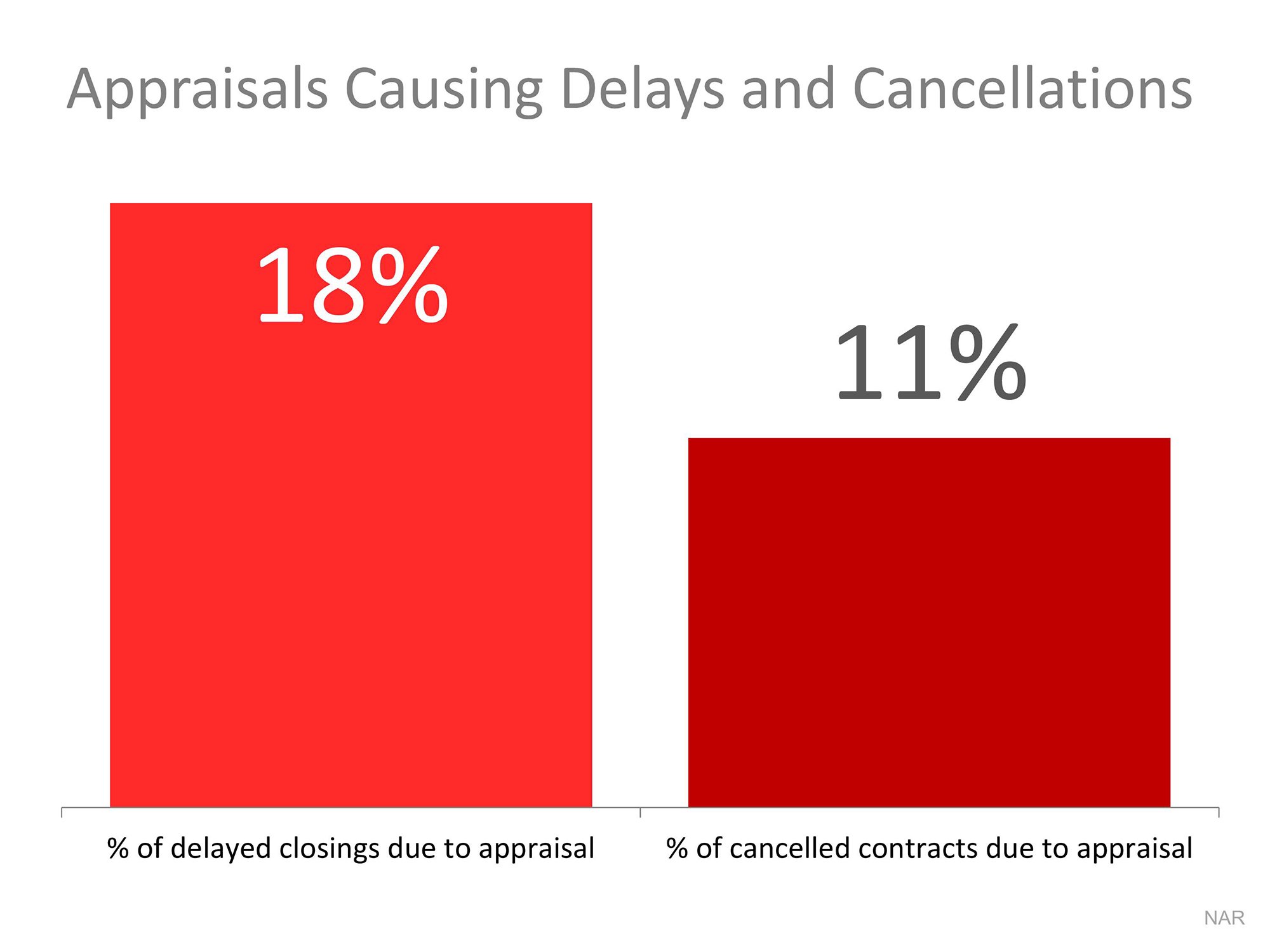
The National Association of Realtors (NAR) recently released information revealing just how prominent the challenge is in today’s market.

Home Prices Are Up…but there is a Challenge | Simplifying The Market

And the challenge is deepening…

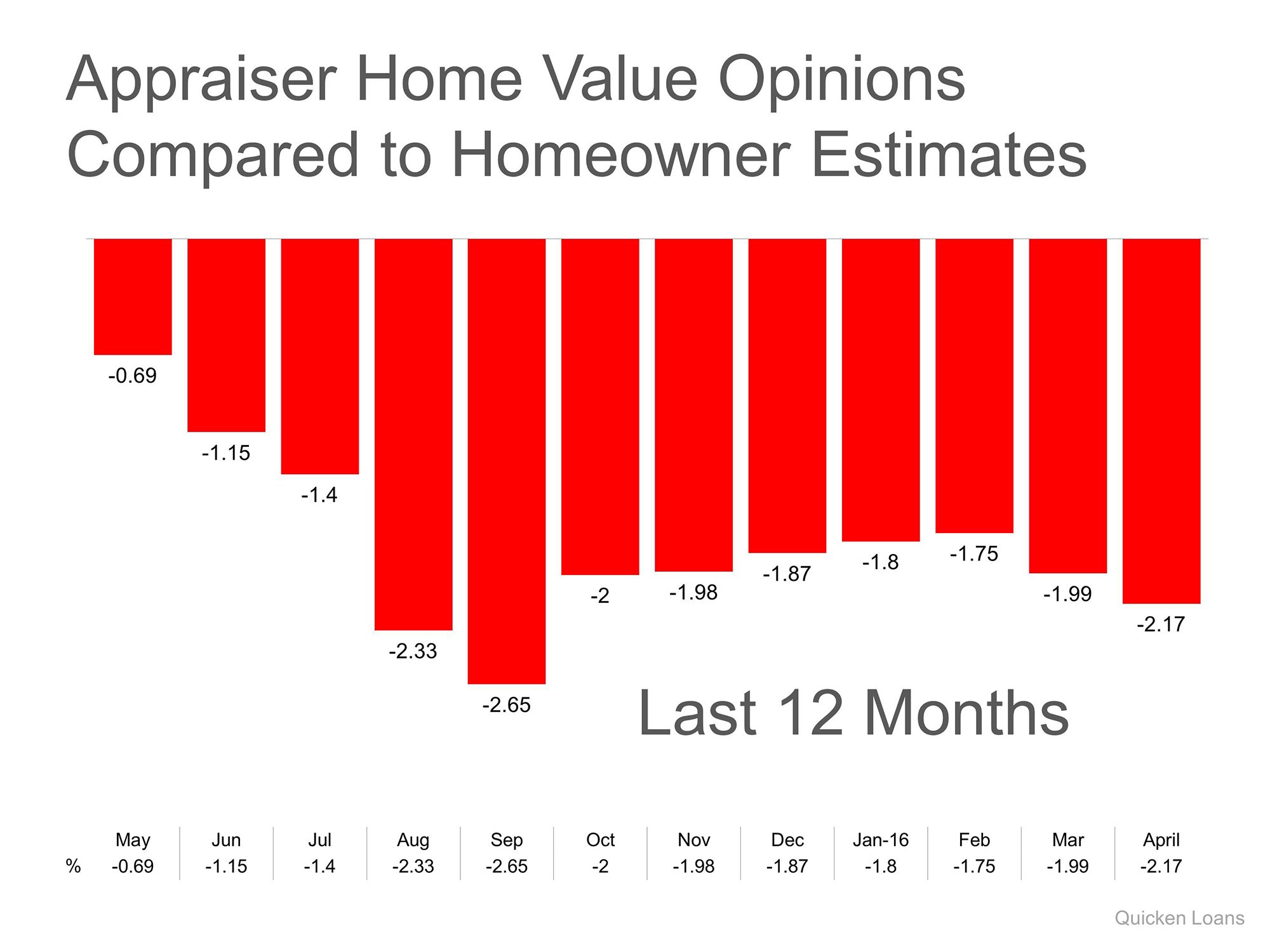
Every month, Quicken Loans measures the disparity between what a homeowner believes their house is worth as compared to an appraiser’s evaluation in their Home Price Perception Index (HPPI). Here is a chart showing that difference for each of the last 12 months.

Home Prices Are Up…but there is a Challenge | Simplifying The Market

As we can see the difference has increased each of the last two months.

Bottom Line

Every house on the market has to be sold twice; once to a prospective buyer and then to the bank (through the bank’s appraisal). With escalating prices, the second sale might be even more difficult than the first. If you are planning on entering the housing market this year, let's meet up so I can guide you through this, and any other obstacle that may arise.

Posted in Selling Your Home
April 21, 2016

Realtors Give Homeowners A Leg Up In Competitive Spring Market

Realtors® Give Homebuyers Leg Up in Competitive Spring Market


WASHINGTON (April 13, 2016) – With demand exceeding supply in markets across the U.S., homebuyers may be facing an uphill battle to find the perfect home this spring. Total housing inventory at the end of February was 1.88 million existing homes available for sale, 1.1 percent lower than last year and at a 4.4 month supply at the current sales pace, which is below the roughly six month supply level needed for a balanced market between buyers and sellers.

In competitive markets like this, it is important that homebuyers work with a Realtor®.  Realtors® who have the National Association of Realtors®’ Accredited Buyer’s Representative® designation are specialized practitioners focused on working directly with buyer-clients and helping them through the challenges of finding the right home in a seller’s market.

“When there is more demand than inventory homes sell quickly, prices rise and bidding wars can start,” said NAR President Tom Salomone, broker-owner of Real Estate II Inc. in Coral Springs, Florida. “A Realtor® with an ABR® designation is a home buyer’s upper hand; they understand local markets and can negotiate on behalf of their buyer-clients.”

Adds Salomone, “Buying a home is often one of the biggest decisions of a person’s life, and having a Realtor® in their corner is the ultimate advantage. They are there to guide consumers through the complexities of this life-changing transaction.”  

NAR’s 2015 Profile of Home Buyers and Sellers asked recent homebuyers what they look for when deciding on a real estate agent; 53 percent said they were looking for someone who could help them find the right home to purchase, and 12 percent said they wanted someone who can help them negotiate the terms of sale. The report also found that homebuyers look at a median of 10 houses before deciding on one to purchase, and the typical search lasts for 10 weeks.

“Having a real estate expert with specific knowledge of the local market and purchase process can mean the difference between a homebuyer getting that 10th house and having to search for another,” said Salomone.

In 2016, the ABR® designation celebrates its 20th anniversary, with over 28,000 ABR® designees. Realtors® with the designation are experienced real estate agents who have completed advanced training in representing the specific needs of buyers during a real estate transaction and have unique, up-to-date insights on the best way to approach their local market.

The designation is awarded by the Real Estate Buyer’s Agent Council, a wholly-owned subsidiary of NAR and the world’s largest association of real estate professionals focusing specifically on representing the real estate buyer.

To find out more about the ABR® designation and the homebuying process, consumers can visit rebac.net/home-buying (link is external).

The National Association of Realtors®, “The Voice for Real Estate,” is America’s largest trade association, representing more than 1.1 million members involved in all aspects of the residential and commercial real estate industries.

Posted in Selling Your Home