Real Talk 

When it comes to making a great real estate investment, knowledge is key. Our blog provides the essential information you'll need to make your next move.

Feb. 5, 2017

Daydreaming About Your Perfect Home?

 Know What You WANT vs. What You NEED

Daydreaming About Your Perfect Home? Know What You WANT vs. What You NEED | Keeping Current Matters

In this day and age of being able to shop for anything anywhere, it is really important to know what you’re looking for when you start your home search.

If you’ve been thinking about buying a home of your own for some time now, you’ve probably come up with a list of things that you’d LOVE to have in your new home. Many new homebuyers fantasize about the amenities that they see on television or Pinterest, and start looking at the countless homes listed for sale through rose-colored glasses.

Do you really need that farmhouse sink in the kitchen in order to be happy with your home choice? Would a two-car garage be a convenience or a necessity? Could the ‘man cave’ of your dreams be a future renovation project instead of a make-or-break right now?

The first step in your home buying process should be to get pre-approved for your mortgage. This allows you to know your budget before you fall in love with a home that is way outside of it.

The next step is to list all the features of a home that you would like, and to qualify them as follows:

  • ‘Must Haves’ – if this property does not have these items, then it shouldn’t even be considered. (ex: distance from work or family, number of bedrooms/bathrooms)
  • ‘Should Haves’ – if the property hits all of the 'must haves' and some of the 'should haves,' it stays in contention but does not need to have all of these features.
  • ‘Absolute Wish List’ – if we find a property in our budget that has all of the ‘must haves,’ most of the ‘should haves,’ and ANY of these, it’s the winner!

Bottom Line

Having this list flushed out before starting your search will save you time and frustration, while also letting your agent know what features are most important to you before starting to show you houses in your desired area
.

Jan. 30, 2017

Will Housing Affordability Be a Challenge in 2017?

Will Housing Affordability Be a Challenge in 2017? | Keeping Current Matters Some industry experts are saying that the housing market may be heading for a slowdown in 2017 based on rising home prices and a jump in mortgage interest rates. One of the data points they use is the Housing Affordability Index, as reported by the National Association of Realtors (NAR). Here is how NAR defines theindex:
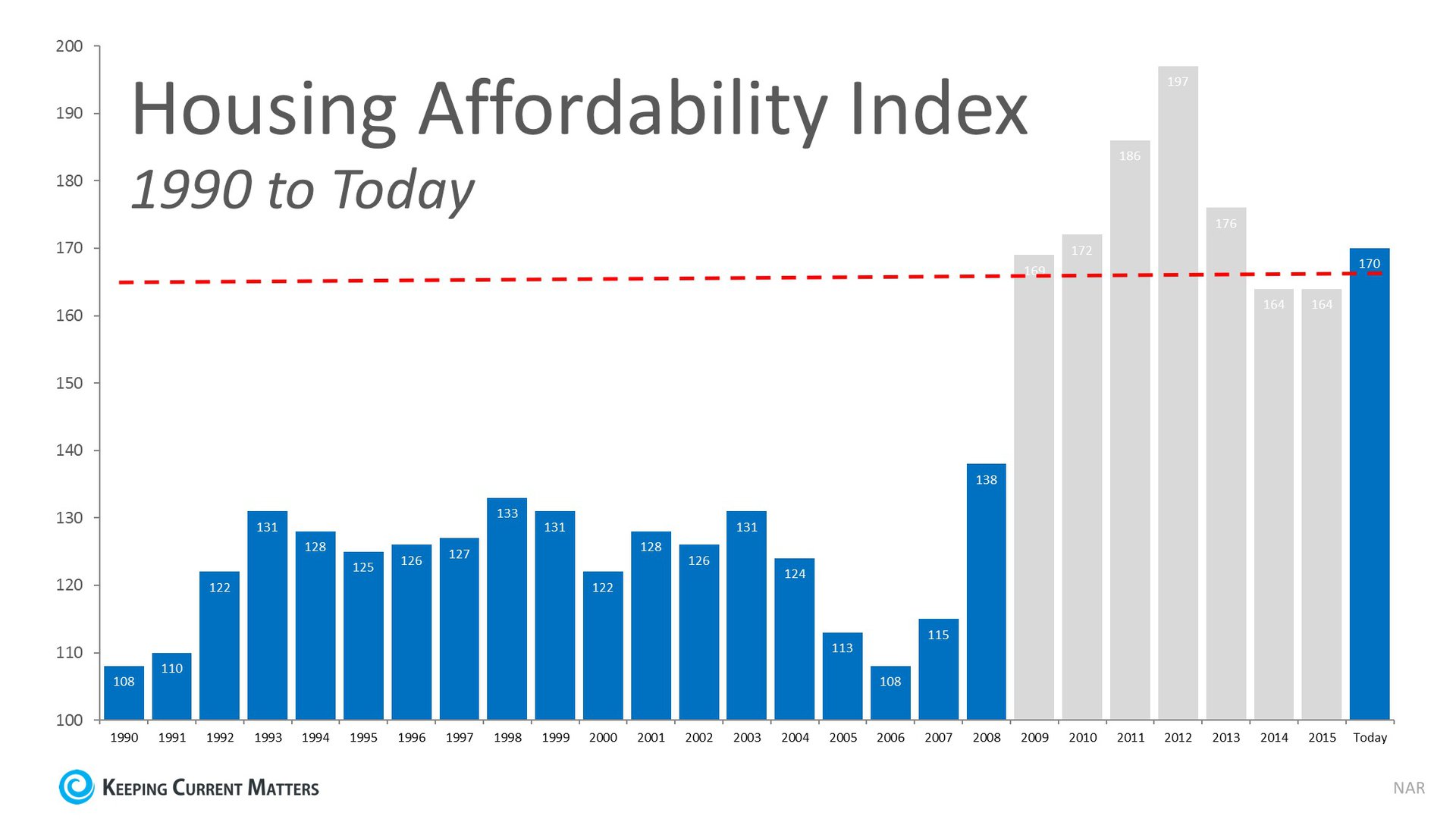
“The Housing Affordability Index measures whether or not a typical family earns enough income to qualify for a mortgage loan on a typical home at the national level based on the most recent price and income data.”
Basically, a value of 100 means a family earning the median income earns enough to qualify for a mortgage on a median-priced home, based on the price and mortgage interest rates at the time. Anything above 100 means the family has more than enough to qualify. The higher the index, the easier it is to afford a home.

Why the concern?

The index has been declining over the last several years as home values increased. Some are concerned that too many buyers could be priced out of the market. But, wait a minute… Though the index skyrocketed from 2009 through 2013, we must realize during that time the housing crisis left the market with an overabundance of housing inventory with as many as one out of three listings being a distressed property (foreclosure or short sale). All prices dropped dramatically and distressed properties sold at major discounts. Then, mortgage rates fell like a rock. The market is recovering, and values are coming back nicely. That has caused the index to fall. However, let’s remove the crisis years and look at the current index as compared to the index from 1990 – 2008: Will Housing Affordability Be a Challenge in 2017? | Keeping Current Matters We can see that, even though prices have increased, mortgage rates are still lower than historical averages and have put the index in a better position than every year for the nineteen years before the crash.

Bottom Line

The Housing Affordability Index is in great shape and should not be seen as a challenge to the real estate market’s continued recovery.
Posted in Buying a home
Jan. 26, 2017

Buying a Home is More Affordable Than Renting in 66% of US Counties


Buying a Home is More Affordable Than Renting in 66% of US Counties | Keeping Current Matters

According to ATTOM Data Solutions’ 2017 Rental Affordability Report, buying a home is more affordable than renting in 354 of the 540 U.S. counties they analyzed.

The report found that “making monthly house payments on a median-priced home — including mortgage, property taxes and insurance — is more affordable than the fair market rent on a three-bedroom property in 354 of the 540 counties analyzed in the report (66 percent).”

For the report, ATTOM Data Solutions compared recently released fair market rent data from the Department of Housing and Urban Development with reported income amounts from the Department of Labor and Statistics to determine the percentage of income that a family would have to spend on their monthly housing cost (rent or mortgage payments).

Rents have been surging faster than home prices in about 37% of the markets measured. Daren Blomquist, Senior Vice President of ATTOM Data Solutions warns that rising interest rates could be the tipping point of affordability:

“While buying continues to be more affordable than renting in the majority of U.S. markets, that equation could change quickly if mortgage rates keep rising in 2017. In that scenario, renters who have not yet made the leap to homeownership will find it even more difficult to make that leap this year.”

Bottom Line

Rents will continue to rise and mortgage interest rates are still at historic lows. Before you sign or renew your next lease, meet with a local professional who can help you determine if you are able to buy a home of your own and lock in your monthly housing expense

Jan. 21, 2017

What Would a Millennial Baby Boom Mean for Housing?


What Would a Millennial Baby Boom Mean for Housing?

What Would a Millennial Baby Boom Mean for Housing? | Keeping Current Matters 

Recently released data from the National Center for Health Statistics revealed that 1.3 million Millennial women gave birth for the first time in 2015. There are now over 16 million women in this generation who have become mothers.

“All told, Millennial women (those born between 1981 to 1997) accounted for about eight in ten (82%) of U.S. births in 2015.”
The data also shows that this generation has waited until later in life to become parents as only 42% of Millennial women were moms in 2014, compared to 49% of Generation X at the same age. A Pew Research Center article discussing the data, points to social influences that may have contributed to thedelay:
“The rising age at first birth is hardly limited to the Millennial generation. It has been a trend since at least 1970. Many factors may contribute, including a shift away from marriage, increasing educational attainment and the movement of women into the labor force.”

Do Millennials Want to Be Parents?

“While Millennials may be delaying parenthood, it’s not for a lack of interest in eventually becoming moms and dads. Members of this generation rated being a good parent as a top priority in a 2010 Pew Research Center survey. Some 52% said it was one of the most important goals in their lives, well ahead of having a successful marriage, which 30% said was one of their most important lifetime goals.”

So, What Does This Mean for the Housing Market?

As Jonathan Smoke, Chief Economist for realtor.com explained: “At any given time in our history, demographics would explain 60-80% of what’s happening [in the market], and we are in a period of time where Millennials make up a largest demographic group.” As more and more Millennial families are formed, this generation will shift their focus to providing the best home for their children to grow up in, the best school districts, and often to the stability that owning a home of their own provides. Two-thirds of Millennials have not yet reached the average first-time home buying age of 32, as reported by the National Association of Realtor. The homeownership rate amongst Millennials has nowhere to go but up!

Bottom Line

Millennials as a generation have delayed traditional social norms until later in their lives. Whether getting married, having children or buying a home, the desire to provide for their family is still there, even if it takes a little while longer than it did for previous generations.
Jan. 19, 2017

If Your Home Hasn't Sold Yet...Check the Price!

If Your Home Hasn’t Sold Yet… Check the Price!

If Your Home Hasn’t Sold Yet… Check the Price! | Keeping Current Matters

The residential housing market has been hot. Home sales have bounced back solidly and are now at their second highest pace since February 2007. Demand has remained strong throughout the winter as many real estate professionals are reporting bidding wars with many homes selling above listing price. What about your house?

If your house hasn’t sold, it is probably because of the price.

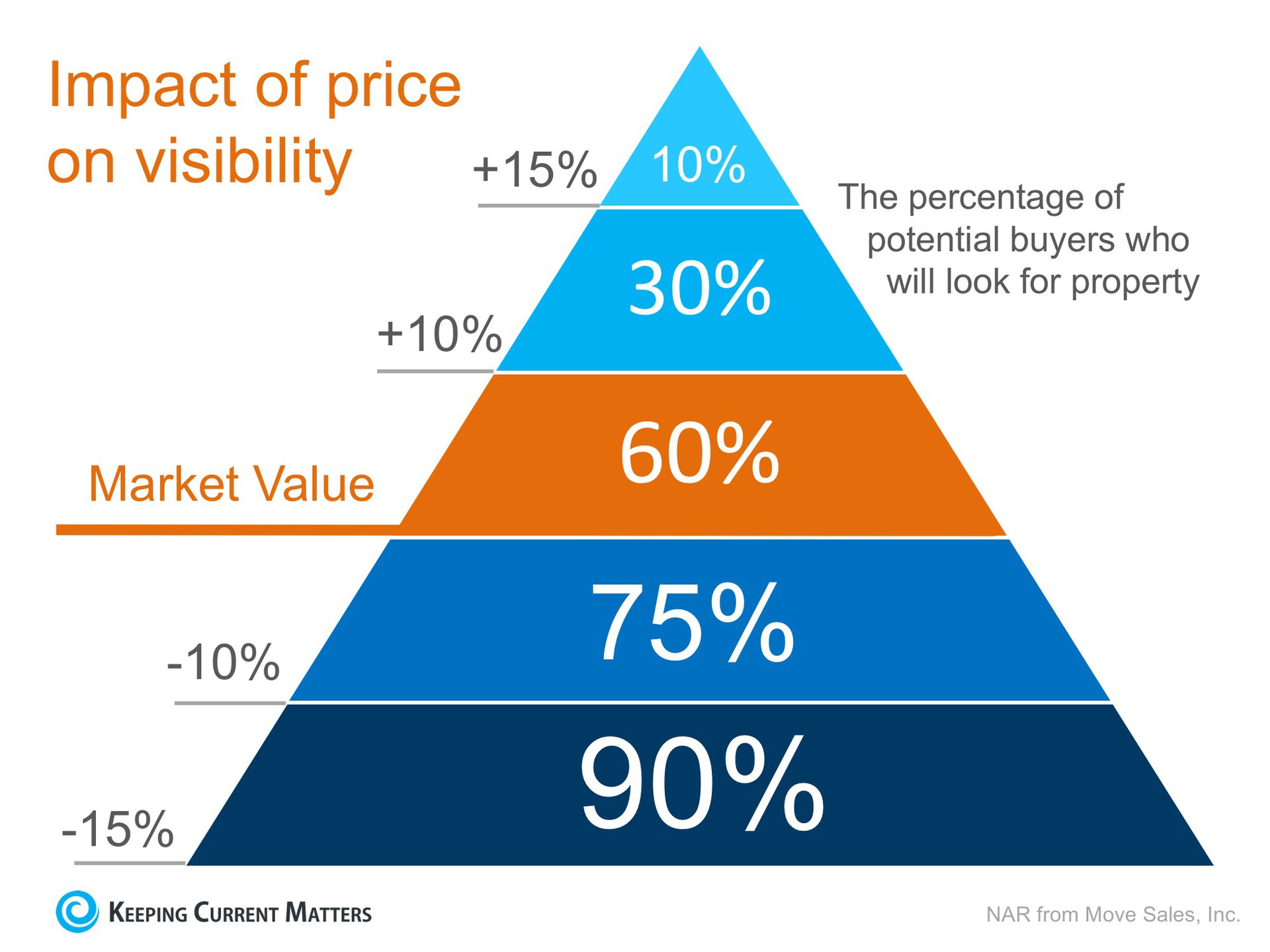
If your home is on the market and you are not receiving any offers, look at your price. Pricing your home just 10% above market value dramatically cuts the number of prospective buyers that will even see your house. See chart below.

If Your Home Hasn’t Sold Yet… Check the Price! | Keeping Current Matters

Bottom Line

The housing market is hot. If you are not seeing the results you want, sit down with your agent and revisit the pricing conversation.


Posted in Selling Your Home
Jan. 14, 2017

Prices Rose 7.1% Year-Over-Year

Prices Rose 7.1% Year-Over-Year [INFOGRAPHIC] | Keeping Current Matters

Some Highlights:

  • CoreLogic's latest Home Price Index shows that prices rose by 7.1% across the United States year-over-year.
  • With mortgage interest rates rising in the short term, CoreLogic believes price appreciation will slow to 4.7% by this time next year.
  • 49 out of 50 states, and the District of Columbia, all had positive appreciation over the last 12 months, with the only exception being the state of Connecticut, which experienced a -0.5% appreciation.
Jan. 12, 2017

Is This the Year to Move Up to Your Dream Home? If So, Do it Early


Is This the Year to Move Up to Your Dream Home? If So, Do it Early | Keeping Current Matters

It appears that Americans are regaining faith in the U.S. economy. The following indexes have each shown a dramatic jump in consumer confidence in their latest surveys:

  1. The University of Michigan Consumer Sentiment Index
  2. National Federation of Independent Businesses' Small Business Optimism Index
  3. CNBC All-America Economic Survey
  4. The Conference Board Consumer Confidence Survey

It usually means good news for the housing market when the country sees an optimistic future. People begin to dream again about the home their family has always wanted, and some make plans to finally make that dream come true.

If you are considering moving up to your dream home, it may be better to do it earlier in the year than later. The two components of your monthly mortgage payment (home prices and interest rates) are both projected to increase as the year moves forward, and interest rates may increase rather dramatically. Here are some predictions on where rates will be by the end of the year:

HSH.com:

“We think that conforming 30-year fixed rates probably make it into the4.625 percent to 4.75 percent range at some point during 2017 as a peak.”

Svenja Gudell, Zillow’s Chief Economist:

“I wouldn’t be surprised if the 30-year fixed mortgage rate hits 4.75 percent.”

Mark Fleming, the Chief Economist at First American:

“[I see] mortgage rates getting much closer to 5 percent at the end of next year.”

Lawrence Yun, NAR Chief Economist:

“By this time next year, expect the 30-year fixed rate to likely be in the 4.5 percent to 5 percent range.”

Bottom Line

If you are feeling good about your family’s economic future and are considering making a move to your dream home, doing it sooner rather than later makes the most sense.

Posted in Buying a home
Jan. 9, 2017

3 Tips for Making Your Dreams Come True


3 Tips for Making Your Dream of Buying a Home Come True [INFOGRAPHIC] | Keeping Current Matters

Jan. 6, 2017

Start 2017 Off Right...List Your House for Sale


Start 2017 Off Right… List Your House for Sale | Keeping Current Matters

As we are about to bring in the New Year, families across the country will be deciding if this is the year that they will sell their current house and move into their dream home. Many will decide that it is smarter to wait until the spring “buyer’s market” to list their house. In the past, that might have made sense. However, this winter is not like recent years.

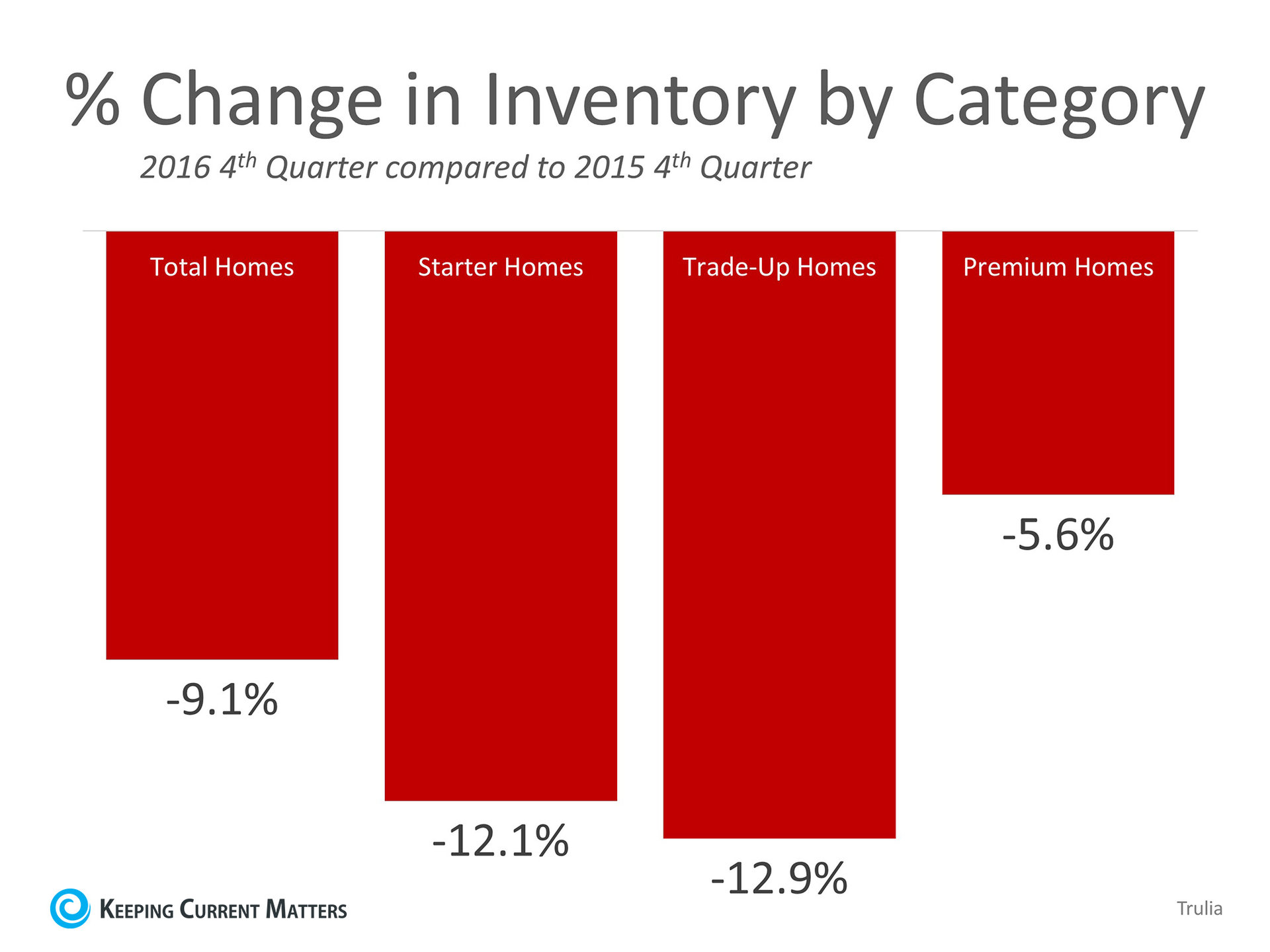
The recent jump in mortgage rates has forced buyers off the fence and into the market, resulting in incredibly strong demand RIGHT NOW!! At the same time, inventory levels of homes for sale have dropped dramatically as compared to this time last year.

Here is a chart showing the decrease in inventory levels by category:

Start 2017 Off Right… List Your House for Sale | Keeping Current Matters

Bottom Line

Demand for your home is very strong right now while your competition (other homes for sale) is at a historically low level. If you are thinking of selling in 2017, now may be the time.


Posted in Selling Your Home
Jan. 4, 2017

Top 5 Reasons You Should Not For Sale By Owner

Top 5 Reasons You Should Not For Sale By Owner

Top 5 Reasons You Should Not For Sale By Owner | Keeping Current Matters

In today’s market, with home prices rising and a lack of inventory, some homeowners may consider trying to sell their home on their own, known in the industry as a For Sale by Owner (FSBO). There are several reasons why this might not be a good idea for the vast majority of sellers.

Here are the top five reasons:

1. Exposure to Prospective Buyers

Recent studies have shown that 94% of buyers search online for a home. That is in comparison to only 17% looking at print newspaper ads. Most real estate agents have an internet strategy to promote the sale of your home. Do you?

2. Results Come from the Internet

Where did buyers find the home they actually purchased?

  • 51% on the internet
  • 34% from a Real Estate Agent
  • 9% from a yard sign
  • 1% from newspapers

The days of selling your house by just putting up a sign and putting it in the paper are long gone. Having a strong internet strategy is crucial.

3. There Are Too Many People to Negotiate With

Here is a list of some of the people with whom you must be prepared to negotiate if you decide to For Sale By Owner:

  • The buyer who wants the best deal possible
  • The buyer’s agent who solely represents the best interest of the buyer
  • The buyer’s attorney (in some parts of the country)
  • The home inspection companies, which work for the buyer and will almost always find some problems with the house
  • The appraiser if there is a question of value

4. FSBOing Has Become More And More Difficult

The paperwork involved in selling and buying a home has increased dramatically as industry disclosures and regulations have become mandatory. This is one of the reasons that the percentage of people FSBOing has dropped from 19% to 8% over the last 20+ years.

The 8% share represents the lowest recorded figure since NAR began collecting data in 1981.

5. You Net More Money When Using an Agent

Many homeowners believe that they will save the real estate commission by selling on their own. Realize that the main reason buyers look at FSBOs is because they also believe they can save the real estate agent’s commission. The seller and buyer can’t both save the commission.

Studies have shown that the typical house sold by the homeowner sells for $185,000, while the typical house sold by an agent sells for $245,000. This doesn’t mean that an agent can get $60,000 more for your home, as studies have shown that people are more likely to FSBO in markets with lower price points. However, it does show that selling on your own might not make sense.

Bottom Line

Before you decide to take on the challenges of selling your house on your own, sit with a real estate professional in your marketplace and see what they have to offer.

Posted in Selling Your Home